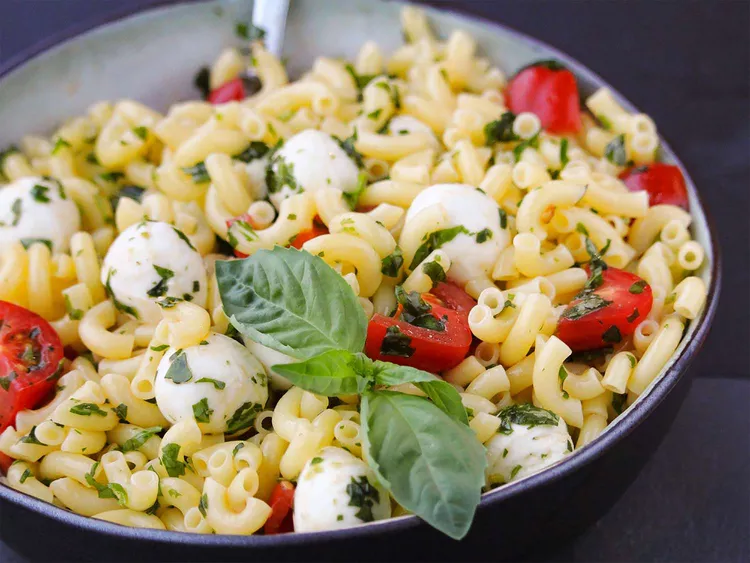
The Ultimate Pesto Pasta Caprese Salad Recipe: A Vibrant Summer Masterpiece
Summer entertaining demands dishes that are visually striking, intensely flavorful, and resilient enough to grace a sun-drenched buffet table without losing their structural integrity. This Pesto Pasta Caprese Salad is the definitive answer. By marrying the bright, herbaceous punch of a classic Genoese basil pesto with the milky, clean profiles of a traditional Italian Caprese, this dish elevates the humble pasta salad into a sophisticated centerpiece.
What makes this recipe uniquely successful is its calculated interplay of textures and structural components. The architectural ridges of the radiatori pasta act as micro-pockets that trap a vibrant green emulsion. Meanwhile, the explosive, acidic sweetness of ripe cherry tomatoes cleanly cuts through the rich fat of toasted pine nuts and extra virgin olive oil. Creamy bocconcini (fresh mozzarella pearls) provide a luxurious, tender chew, and a final drizzle of concentrated balsamic glaze delivers a sharp, sweet contrast that unifies the entire plate.
Whether you are hosting an upscale backyard gathering, packing a gourmet picnic, or seeking a high-yield, premium meal prep option for busy weeknights, this recipe delivers maximum culinary impact with minimal time spent over a hot stove.
The Culinary Science of the Perfect Pasta Salad
To transcend the uninspired, mayonnaise-laden pasta salads of historical potlucks, each element must be approached with professional intent:
-
The Geometry of Pasta: Standard elbows or smooth penne simply will not suffice. Shapes with deep ridges, internal pockets, or tight spirals—such as radiatori, fusilli, campanelle, or cavatappi—are mandatory. They possess the required surface area to hold onto the pesto emulsion, ensuring every single bite delivers uniform flavor.
-
The Pesto Emulsion: While high-quality store-bought alternatives work in a pinch, a scratch-made pesto crafted from sweet basil, toasted pine nuts, raw garlic, aged Parmigiano-Reggiano, and premium cold-pressed extra virgin olive oil provides a transformative brightness that processed alternatives cannot replicate.
-
The Tomato Integrity: Slicing large slicing tomatoes creates excess seed water that dilutes the dressing and results in a soggy salad. Instead, utilizing whole or longitudinally halved cherry or grape tomatoes preserves their structural capsule, offering a clean, concentrated burst of acidity exactly when bit.
Ingredients
For the Vibrant Basil Pesto
-
Fresh sweet basil leaves: 2 cups, firmly packed (stems discarded)
-
Pine nuts: $1/3$ cup, lightly toasted
-
Garlic cloves: 2 medium, peeled and coarsely chopped
-
Parmigiano-Reggiano cheese: $1/2$ cup, freshly grated
-
Extra virgin olive oil: $1/2$ cup, high-quality cold-pressed
-
Kosher salt: $1/2$ teaspoon (plus more to taste)
-
Freshly cracked black pepper: $1/4$ teaspoon
For the Salad Assembly & Garnish
-
Dried radiatori or campanelle pasta: 1 pound (16 ounces)
-
Cherry tomatoes: 2 cups, halved lengthwise
-
Bocconcini (fresh mozzarella pearls): 8 ounces, thoroughly drained
-
Fresh baby arugula: 1 cup, loosely packed (optional, for a peppery counter-note)
-
Toasted pine nuts: 2 tablespoons (reserved for final presentation)
-
Fresh basil leaves: $1/4$ cup, cut into delicate chiffonade ribbons
-
Aged balsamic glaze: 2 tablespoons, for the final drizzle
Step-by-Step Instructions
Step 1: Toast the Aromatics
Place a dry, heavy-bottomed skillet over medium-low heat. Add the $1/3$ cup of pine nuts for the pesto baseline and the additional 2 tablespoons reserved for the final garnish. Cook, stirring continuously and shaking the pan frequently, for 3 to 5 minutes. Watch the pan intently; because pine nuts boast high concentrations of natural oils, they transition from pale gold to scorched in a matter of seconds. As soon as they are fragrant and uniformly golden brown, immediately transfer them to a cool ceramic bowl to halt the residual cooking process.
Step 2: Construct the Scratch Pesto
In the bowl of a heavy-duty food processor, introduce the packed fresh basil leaves, the $1/3$ cup of cooled toasted pine nuts, the chopped garlic cloves, the kosher salt, and the cracked black pepper. Pulse the machine 10 to 12 times in short bursts until the ingredients form a uniformly coarse, granular paste. Add the freshly grated Parmigiano-Reggiano cheese.
Set the food processor to its low, continuous setting. Slowly stream the extra virgin olive oil through the top feed tube in a thin, unbroken thread. This slow introduction creates a stable, glossy green emulsion. Once smooth, sample the pesto and adjust with an extra pinch of salt if desired. Scrape the pesto into a glass bowl, press plastic wrap directly onto the surface to block oxygen contact and prevent browning, and set aside.
Step 3: Cook the Pasta to True Al Dente
Bring a large, heavy stockpot filled with 4 quarts of water to a violent, rolling boil over high heat. Add 1 generous tablespoon of kosher salt to the water—it should taste reminiscent of the sea. Drop the pound of pasta into the pot and stir immediately with a long wooden spoon to prevent the starch from bonding the shapes to the bottom.
Cook according to the package parameters, but begin testing the texture 2 minutes before the official timer expires. The pasta must be executed al dente—retaining a firm, definitive core when bitten.
Chef’s Advice: Pasta naturally softens as it marinates in the sauce over time. Pulling the pasta off the heat when it still possesses a slight bite guarantees it will hold its shape perfectly rather than degrading into mush.
Step 4: Cool the Starch Responsibly
Drain the cooked pasta into a wide colander. Do not rinse the pasta under cold sink water; doing so strips away the natural surface starches required to bind the pesto to the pasta valleys. Instead, spread the steaming pasta across a large rimmed baking sheet in a single, even layer. Drizzle with 1 teaspoon of extra virgin olive oil to prevent clumping, and let it cool naturally to room temperature (approximately 15 to 20 minutes).
Step 5: Toss and Combine
In an expansive mixing bowl, combine the completely cooled room-temperature pasta, the freshly blitzed basil pesto, the halved cherry tomatoes, and the drained bocconcini pearls.
Using a flexible rubber spatula, gently fold the ingredients together from the bottom upward, ensuring the rich pesto coats every curve and crevice of the pasta shapes. If you opt to include the baby arugula for a bright pop of green and peppery complexity, fold it in during the final three turns so it remains crisp.
Step 6: Garnish for Service
Transfer the salad into a wide, shallow ceramic serving bowl. Just prior to serving, scatter the remaining 2 tablespoons of toasted pine nuts and the fresh basil chiffonade ribbons over the top. Conclude by sweeping a zig-zag pattern of the thick, syrupy aged balsamic glaze across the surface for a dramatic, professional aesthetic.
Expert Tips & Variations
Ingredient Substitutions and Adaptations
This recipe is exceptionally dynamic and can easily adjust to various dietary preferences without losing its luxurious mouthfeel:
| Original Ingredient | Dietary/Preference Substitute | Culinary Profile Change |
| Pine Nuts | Toasted Walnuts or Pepitas (Pumpkin Seeds) | Walnuts contribute a deep, rustic bitterness; pepitas yield an allergy-friendly, completely nut-free alternative. |
| Bocconcini (Fresh Mozzarella) | Firm Vegan Mozzarella Pearls or Cubed Marinated Tofu | Mimics the traditional clean, milky bite while transitioning the dish into a 100% plant-based offering. |
| Radiatori Pasta | High-Quality Chickpea or Brown Rice Fusilli | Seamlessly accommodates gluten-sensitive diners while retaining excellent structural structural ridges. |
| Parmigiano-Reggiano | Nutritional Yeast (2-3 tablespoons) | Provides the requisite sharp, umami flavor depth vital for an authentic vegan alternative. |
-
Preventing Pesto Discoloration: If you plan to engineer this dish 24 hours in advance, incorporate $1/2$ teaspoon of fresh lemon juice into the food processor during the oil drizzle. The natural ascorbic acid serves as an antioxidant, ensuring your pesto retains its brilliant chartreuse hue instead of dulling into an unappealing olive drab.
-
The Outdoor Event Advantage: Because this recipe relies on a clean, light oil-and-cheese emulsion rather than unstable eggs or heavy mayonnaise, it can safely remain out on buffet tables far longer during hot weather events.
Serving Suggestions
-
Elevate to a Complete Entrée: Fold in 2 cups of shredded rotisserie chicken, chilled grilled chicken breast strips, or cold poached prawns. These clean, lean proteins pair beautifully with the herbaceous backdrop.
-
The Sommelier’s Pairing: Pair this dish alongside a crisp, high-acid, bone-dry white wine. An Italian Sauvignon Blanc, a Vermentino, or a cold Pinot Grigio cuts right through the luxurious fat of the olive oil and cheese, cleansing the palate between bites.
-
Temperature Management: Avoid serving this salad ice-cold straight out of a deep chill. Allowing the dish to rest on the counter for 15 minutes before serving permits the olive oil to liquefy completely and lets the aromatic basil oils release their full bouquet.
Storage & Make-Ahead Notes
-
Refrigeration: Store any remaining pasta salad in an airtight glass container in the refrigerator for up to 3 to 4 days.
-
The Moisture Restoration Fix: Starchy pasta naturally drinks up liquid as it sits. If your leftovers appear dry or muted the next day, resist adding more heavy pesto. Instead, toss the salad with 1 tablespoon of extra virgin olive oil or a tiny splash of room-temperature water. This instantly re-emulsifies the dressing, restoring its glossy, luxurious sheen.
-
Freezing Restrictions: Under no circumstances should this salad be frozen. Freezing structurally destroys fresh tomatoes, turning them into water when thawed, and causes fresh mozzarella to become unpleasantly spongy, chalky, and separated.
Nutrition Information
Estimates are calculated per individual serving based on a yield of 6 generous side-salad portions.
-
Calories: 460 kcal
-
Protein: 14 g
-
Fat: 24 g
-
Saturated Fat: 7 g
-
Carbohydrates: 48 g
-
Fiber: 3 g
-
Sugar: 3 g
-
Sodium: 410 mg