


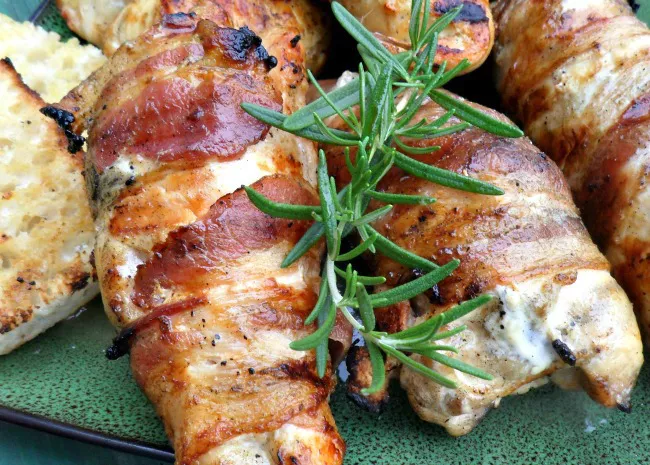
The Ultimate Grilled Chicken with Rosemary and Bacon: A Masterclass in Flavor and Texture
Mastering the backyard grill requires balancing two competing elements: maintaining moisture in lean proteins while maximizing flavor through caramelization and smoke. Boneless, skinless chicken breasts are notoriously prone to drying out over open flames due to their low fat content. However, by introducing a classic culinary pairing—fresh, piney rosemary and smoky, fat-rich bacon—you create a self-basting environment that yields exceptionally juicy results.
This recipe draws inspiration from rustic Tuscan grilling traditions, where sturdy wood herbs like rosemary are paired with cured meats to infuse poultry with deep, resonant flavors. The bacon acts as an insulation barrier against direct, intense heat, while its rendering fat continuously lubricates the chicken breast meat during cooking. Combined with a bright, acidic citrus marinade that weakens tight protein bonds, this dish delivers an perfect balance of smoky, salty, herbaceous, and tangy profiles. Whether prepared on an outdoor gas grill, charcoal pit, or a heavy cast-iron indoor grill pan, this recipe ensures restaurant-quality execution every single time.
The Core Science: Why This Combination Works
To appreciate this dish fully is to understand how these three primary elements interact under high-heat cooking conditions:
1. The Chemistry of the Rosemary Wrap
Rosemary contains fat-soluble essential oils, primarily cineole, pinene, and camphor. When raw rosemary is placed over direct flame, these delicate oils can burn and turn bitter. By trapping fresh rosemary sprigs beneath a layer of bacon, the oils dissolve directly into the melting bacon fat rather than vaporizing into the air. This infuses the chicken deeply with an herbaceous, woodsy aroma without charring the herb itself.
2. Self-Basting via Cured Fat
As the thick-cut bacon heats up on the grill grates, its intramuscular fat begins to render (melt). Because the bacon is wrapped securely around the lean chicken breast, this fat flows over and absorbs into the surface of the chicken. This process, known in classical French cooking as barding, effectively guards the poultry against the drying effects of direct heat conduction.
3. Surface Area and Thickness Equalization
Chicken breasts are naturally uneven, featuring a thick lobe that tapers into a thin tail. If grilled unmodified, the thin end dries out completely by the time the thickest center reaches a safe internal temperature. Pounding the meat to a uniform thickness solves this dilemma entirely, guaranteeing that the entire cut cooks at an identical rate.
Ingredients You Will Need
Achieving the perfect balance of flavors requires sourcing high-quality ingredients. Seek out thick-cut bacon from your local butcher; thin-sliced breakfast bacon will render too quickly and crisp up before the chicken inside has completed cooking.
For the Citrus-Herb Marinade
-
4 boneless, skinless chicken breasts (approximately 6 to 8 ounces each)
-
1/4 cup extra-virgin olive oil (yields a clean, fruity base flavor)
-
3 tablespoons fresh lemon juice (from roughly 1 large, juicy lemon)
-
1 tablespoon lemon zest (finely grated)
-
3 tablespoons fresh rosemary, minced fine
-
4 cloves fresh garlic, smashed and minced into a smooth paste
-
1.5 teaspoons kosher salt (coarse flakes distribute more evenly than fine table salt)
-
1 teaspoon freshly cracked black pepper
For the Assembly and Garnish
-
8 slices thick-cut applewood or hickory-smoked bacon
-
4 sturdy sprigs of fresh rosemary (whole)
-
2 tablespoons pure honey or maple syrup (for the optional finishing glaze)
-
High-smoke-point oil (such as canola, grapeseed, or avocado oil) for lubricating the grill grates
Step-by-Step Instructions
Carefully manage the timing between your prep work and the actual grilling phase to ensure the bacon crisps up nicely without overcooking the chicken inside.
Critical Safety Metric: Always insert a clean, instant-read digital probe thermometer into the absolute center of the thickest part of the chicken breast. The target internal temperature must register exactly 165°F to ensure it is fully cooked and safe to consume.
Ingredient Substitution Matrix
If you need to pivot based on what is available in your pantry, utilize this curated table to swap components safely without unbalancing the recipe’s flavor profile.
| Original Ingredient | Best Alternative | Culinary Impact & Adjustments |
| Boneless Chicken Breasts | Boneless Chicken Thighs | Thighs possess more natural fat. Increase grill time by 2 minutes per side; internal temp must reach 175°F. |
| Thick-Cut Bacon | Pancetta (Italian Cured Pork) | Pancetta adds a deeper peppery flavor but is thinner; wrap tightly and reduce initial side cook time by 1 minute. |
| Fresh Lemon Juice | White Wine Vinegar | Maintains the brightness needed to break down surface proteins without adding citrus top-notes. |
| Fresh Rosemary | Fresh Thyme or Sage | Earthy and robust alternatives that handle direct grill heat well without turning bitter. |
Expert Tips & Variations
-
Pre-Soak Your Toothpicks: To prevent the wooden toothpicks from burning into charcoal while on the grill grates, submerge them completely in a cup of cold water for at least 15 to 20 minutes before assembling your chicken wraps.
-
Mastering the Two-Zone Grill Setup: Bacon fat carries a high flame risk. By keeping one half of your grill free of charcoal or turning those specific gas burners off completely, you create a safe zone. If the bacon drips cause a flare-up that threatens to char your meat, simply slide the chicken to the unlit side, close the lid, and let the ambient convective heat do the work.
-
The Crispy Skillet Finish (Indoor Adjustments): If you are cooking indoors on a cast-iron grill pan, the bacon may struggle to crisp up on its edges due to lacking full contact with flat heat. To remedy this, transfer the pan into a preheated oven set to 400°F for the final 4 minutes of cooking.
Dietary Adjustments
-
Low-Sodium Option: Standard bacon contains high levels of salt. To adjust, eliminate the kosher salt from the chicken marinade entirely and opt for a low-sodium or uncured bacon variation.
-
The No-Wrap Alternative (Lighter Profile): If you want to cut down on fat grams per serving, skip the wrapping step entirely. Grill the chicken breasts plain with the rosemary marinade. In a separate skillet on the stove, fry 4 slices of thick-cut bacon until completely shattered and crisp. Drain on paper towels, chop into fine bits, and scatter them over the chicken breasts immediately after resting.
Serving Suggestions
This dish features a bold, savory flavor profile with plenty of rich fats, which means it pairs beautifully with sides that offer crisp textures or sharp, contrasting acidity.
Summer Patio Presentation
Slice the rested, bacon-wrapped chicken crosswise into 1/2-inch thick medallions. Fan them out over a wide platter filled with a fresh baby arugula salad tossed in a sharp lemon-mustard vinaigrette. The peppery bite of raw arugula cuts right through the rich coating of the rendered bacon fat. Pair with a chilled glass of dry Sauvignon Blanc or an oak-free Chardonnay.
Rustic Autumn Comfort
For a more comforting, cool-weather meal, serve the whole grilled chicken breast alongside a portion of roasted garlic mashed potatoes or polenta. The savory juices from the rested bacon and chicken will naturally pool down into the potatoes, acting as a built-in gravy. Round out the plate with charred broccolini or balsamic-glazed Brussels sprouts.
Storage & Make-Ahead Notes
Refrigeration Procedures
Allow any remaining chicken pieces to cool completely to room temperature (do not let meat sit out for more than two hours). Place the leftovers into a shallow, airtight glass or plastic container. Keep refrigerated for up to 3 to 4 days.
Freezing Guidelines
You can freeze these cooked chicken breasts easily. Wrap each individual, cooled breast tightly in premium plastic wrap to eliminate air pockets, then drop them into a heavy-duty freezer bag. Label with the current date; they will keep well for up to 2 months. Defrost completely in the refrigerator for 12 to 24 hours before you plan to reheat them.
Reheating to Preserve Moisture
Microwaving leftover chicken breasts causes the remaining water molecules to vibrate intensely, which boils the meat from the inside out and leaves it dry and rubbery. For the best results, use your oven instead:
-
Preheat your kitchen oven to 350°F.
-
Place the chicken breasts inside a baking dish. Pour 3 tablespoons of low-sodium chicken stock or water into the bottom of the pan to create a humid environment.
-
Cover the top of the dish tightly with a sheet of aluminum foil.
-
Bake for 12 to 15 minutes until the center reaches an internal temperature of 165°F.
-
Optional: Remove the foil sheet and slide the pan under your oven’s broiler for 60 to 90 seconds to crisp the bacon skin back up before carving.
Nutrition Information
The values provided below are realistic approximations calculated for one single serving, which consists of one 6-ounce pounded chicken breast wrapped in two slices of thick-cut bacon along with its portion of the olive oil marinade.
-
Calories: 395 kcal
-
Protein: 44 g
-
Fat: 22 g
-
Saturated Fat: 6.5 g
-
Carbohydrates: 2 g
-
Fiber: 0.5 g
-
Sugar: 1 g
-
Sodium: 910 mg