


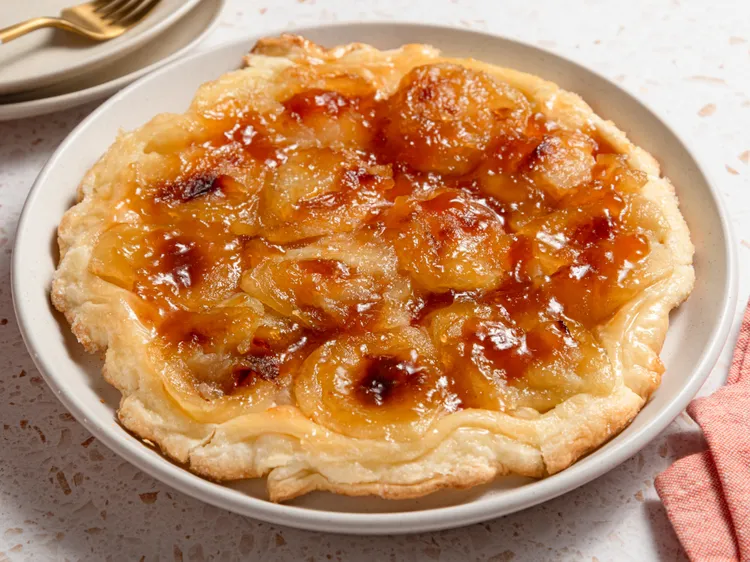
Classic Tarte Tatin Recipe – Traditional French Upside-Down Apple Tart
Introduction
Tarte Tatin is a cornerstone of French pastry, revered for its elegant simplicity and profound depth of flavor. This classic upside-down apple tart is defined by caramelized apples cooked in butter and sugar, finished with a crisp pastry that absorbs the caramel as the tart is inverted after baking. The result is a dessert that is both rustic and refined, balancing sweetness, acidity, and richness in perfect harmony.
This formal, SEO-optimized Tarte Tatin recipe is written for serious home cooks and food enthusiasts seeking consistent, professional results. Every step is designed to ensure properly caramelized apples, a stable caramel sauce, and a pastry that remains crisp rather than soggy. The technique honors traditional French methods while remaining accessible and reliable for modern kitchens.
Ingredients
Caramelized Apple Layer
-
6 large apples (approximately 3 pounds), such as Granny Smith, Honeycrisp, or Braeburn
-
½ cup granulated sugar
-
6 tablespoons unsalted butter, cut into pieces
-
¼ teaspoon fine sea salt
-
1 teaspoon pure vanilla extract (optional)
Pastry Topping
-
1 sheet puff pastry (8–9 ounces), thawed
or -
1 all-butter pie crust, rolled into a 10–11 inch round
Optional for Serving
-
Crème fraîche
-
Lightly whipped cream
-
Vanilla ice cream
Step-by-Step Instructions
1. Prepare the Apples
Peel, core, and halve the apples. If the apples are particularly large, cut them into quarters. Uniform sizing is essential to ensure even caramelization and a cohesive final presentation.
2. Prepare the Caramel
Preheat the oven to 375°F (190°C).
In a 10-inch oven-safe skillet—preferably cast iron or stainless steel—spread the sugar evenly over medium heat. Allow the sugar to melt without stirring until it becomes a deep amber caramel, approximately 5–7 minutes. Gently swirl the pan as needed to promote even coloring.
Add the butter carefully, as the mixture will bubble vigorously. Stir until smooth and fully incorporated. Add the salt and vanilla extract, if using.
3. Caramelize the Apples
Remove the skillet briefly from heat and arrange the apples cut-side up in a tight circular pattern, starting at the outer edge and working inward. Pack the apples closely, as they will shrink during cooking.
Return the skillet to medium heat and cook for 10–15 minutes, spooning caramel over the apples occasionally. The apples should soften slightly and become glossy while maintaining their shape.
4. Apply the Pastry
Place the puff pastry or pie crust over the apples, gently tucking the edges down inside the skillet. Cut 2–3 small slits in the pastry to allow steam to escape during baking.
5. Bake
Transfer the skillet to the preheated oven and bake for 30–35 minutes, or until the pastry is fully puffed and evenly golden brown.
6. Rest and Invert
Remove the tart from the oven and allow it to rest for 10 minutes. This resting period stabilizes the caramel and reduces sticking.
Place a large serving plate over the skillet. Using oven mitts, invert the tart carefully in one decisive motion. Lift off the skillet slowly to reveal the caramelized apples.
Expert Tips & Variations
Apple Selection
Firm, acidic apples are essential for structure and balance. Granny Smith apples offer classic tartness, while Honeycrisp and Braeburn provide additional sweetness and aromatic complexity. Avoid soft or overly sweet varieties.
Caramel Precision
Proper caramelization is critical. Undercooked caramel lacks depth, while overcooked caramel becomes bitter. Aim for a deep amber color with a warm, nutty aroma.
Pastry Considerations
-
Puff pastry produces a lighter, crisp topping.
-
Traditional pie crust offers a more substantial, buttery finish.
Both options are technically sound and appropriate for classic Tarte Tatin preparation.
Flavor Variations
-
Add a pinch of cinnamon or nutmeg to the caramel.
-
Deglaze the caramel with 1 tablespoon apple brandy or Calvados after removing it from heat.
-
Substitute a portion of the apples with firm pears for a nuanced variation.
Dietary Modifications
-
Vegetarian: Naturally vegetarian.
-
Gluten-Free: Use a high-quality gluten-free pastry crust.
-
Reduced Sugar: Reduce sugar to ⅓ cup for a lighter caramel, noting that color and intensity will be less pronounced.
Serving Suggestions
Tarte Tatin is best served warm, when the caramel is fluid and the apples are tender yet structured. Serve plain to appreciate its complexity, or accompany with crème fraîche for acidity, whipped cream for softness, or vanilla ice cream for classic contrast.
This dessert is well suited to formal dinners, holiday meals, and refined afternoon service.
Storage & Make-Ahead Notes
-
Refrigeration: Store covered in the refrigerator for up to 3 days.
-
Reheating: Reheat in a 325°F oven for 10–12 minutes to restore pastry texture.
-
Make-Ahead: Apples and caramel may be prepared up to 24 hours in advance and refrigerated in the skillet. Bring to room temperature before baking with pastry.
-
Freezing: Freezing is not recommended, as caramel and pastry quality deteriorate upon thawing.
Nutrition Information (Per Serving)
Based on 8 servings
-
Calories: 360 kcal
-
Protein: 3 g
-
Fat: 20 g
-
Saturated Fat: 12 g
-
Carbohydrates: 44 g
-
Fiber: 4 g
-
Sugar: 26 g
-
Sodium: 220 mg
Conclusion
This classic Tarte Tatin recipe exemplifies the principles of French dessert making: restraint, precision, and respect for ingredients. Through careful caramelization, thoughtful apple selection, and proper baking technique, this recipe delivers a polished, authoritative result suitable for both home kitchens and professional presentation.