


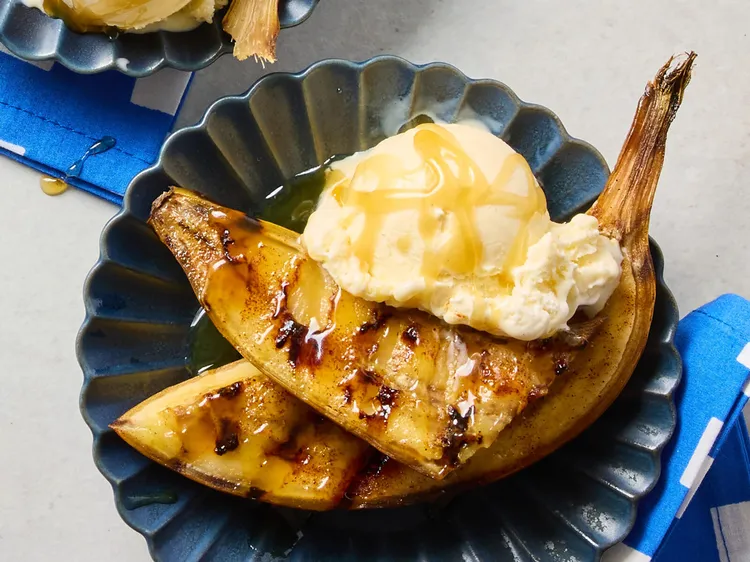
Elevated Outdoor Dining: Grilled Bananas with Salted Coconut Caramel
The Intersection of Tropical Flavors and Culinary Precision
In the realm of contemporary outdoor gastronomy, the transition from savory entrees to dessert often presents a challenge: maintaining the momentum of the grill without overcomplicating the final course. Grilled Bananas with Coconut Caramel Sauce represents a sophisticated solution, utilizing the residual heat of the charcoal or gas flame to transform simple fruit into a complex, caramelized delicacy.
This dish leverages the Maillard reaction—the chemical process between amino acids and reducing sugars that gives browned food its distinctive flavor. By subjecting the fruit to high-intensity, direct heat, we achieve a smoky depth that balances the inherent sweetness of the banana. Paired with a reduction of full-fat coconut milk and mineral-rich coconut sugar, this recipe offers a dairy-free, refined-sugar-free alternative to traditional foster-style desserts, making it as inclusive as it is indulgent.
Ingredients
Primary Components
-
4 Firm-Ripe Bananas: Select fruit with yellow peels and minimal stippling; structural integrity is paramount for successful grilling.
-
1 tablespoon Neutral Oil: Grapeseed or avocado oil is recommended for its high smoke point.
-
1 tablespoon Coconut Sugar: For topical caramelization.
-
½ teaspoon Ground Cinnamon: High-quality Saigon cinnamon provides the best aromatic profile.
Artisanal Coconut Caramel Sauce
-
1 can (13.5 oz) Full-Fat Coconut Milk: Must be premium quality with a high fat-to-water ratio.
-
¾ cup Coconut Sugar: Utilized for its low glycemic index and deep, earthier flavor profile.
-
1 teaspoon Pure Vanilla Bean Paste: Provides visual flecks and a more concentrated flavor than extract.
-
½ teaspoon Flaky Sea Salt: To provide a sharp, clean contrast to the caramel.
-
1 tablespoon Fresh Lime Juice: To brighten the lipids in the coconut milk.
Textural Garnishes
-
¼ cup Toasted Macadamia Nuts: Roughly crushed.
-
2 tablespoons Large-Flake Unsweetened Coconut: Lightly toasted to a golden hue.
-
Fresh Mint Leaves: Micro-greens or chiffonade for herbaceous brightness.
Step-by-Step Technical Instructions
I. The Reduction of the Coconut Caramel
In a heavy-bottomed stainless steel saucepan, whisk together the coconut milk and coconut sugar. Place over medium heat and bring to a gentle simmer. Reduce the heat to medium-low, allowing the mixture to reduce by approximately 50%.
Technical Note: This process typically requires 15 to 18 minutes. The sauce should reach a viscosity that coats the back of a spoon (nappe consistency). Once achieved, remove from heat and whisk in the vanilla bean paste, sea salt, and lime juice. The sauce will thicken significantly as the temperature drops toward 100°F.
II. Grill Calibration
Prepare your grill for direct heat cooking. Target a grate temperature of 400°F to 450°F. Ensure the grates are meticulously cleaned and seasoned with a light coating of oil to prevent the delicate fruit sugars from bonding to the metal.
III. Preparation of the Fruit
Bisect the bananas lengthwise, leaving the protective peel intact. This “half-shell” method serves as a natural heat shield, allowing the fruit to steam in its own moisture while the exposed surface caramelizes. Brush the flesh with a thin layer of oil and dust with the coconut sugar and cinnamon.
IV. The Grilling Process
-
Place bananas flesh-side down on the hot grates.
-
Sear undisturbed for 2 to 3 minutes. Look for visible caramelization and defined grill marks.
-
Using a fish spatula or thin offset spatula, rotate the bananas peel-side down.
-
Continue cooking for 2 minutes until the peel darkens and the fruit slightly pulls away from the skin.
Expert Culinary Tips and Variations
Ingredient Substitution Matrix
| Original Ingredient | Gourmet Substitution | Dietary Rationale |
| Macadamia Nuts | Toasted Hazelnuts | Adds a more robust, earthy crunch. |
| Coconut Sugar | Muscovado Sugar | Increases moisture and molasses depth. |
| Lime Juice | Yuzu Juice | Offers a more floral, complex acidity. |
| Bananas | Plantains (Very Ripe) | Provides a firmer, more savory starch profile. |
Professional Technique: Cold-Infusion
For a more complex sauce, infuse the coconut milk with a bruised stalk of lemongrass or a piece of star anise during the reduction process. Remove the aromatics before serving to ensure a smooth texture.
Serving and Presentation
To maximize the aesthetic appeal for social media and guest presentation:
-
Plating: Arrange two banana halves in a shallow ceramic bowl.
-
Saucing: Drizzle the warm caramel in a deliberate, zig-zag motion, ensuring the salt flakes remain visible on the surface.
-
Contrast: Serve with a dollop of unsweetened coconut cream or a sharp lime zest to cut through the sugar.
Storage and Reheating Protocols
-
Refrigeration: Store the caramel sauce in a sterilized glass jar for up to 14 days. The bananas are best consumed immediately but can be refrigerated for 24 hours.
-
Reheating (Sauce): Heat the sauce in a double boiler (bain-marie) to prevent the sugars from scorching.
-
Reheating (Fruit): Place in a 350°F oven for 4 minutes to restore the soft texture without overcooking.
Nutrition Information
Estimates per serving (1 banana with 2.5 oz sauce)
-
Calories: 325 kcal
-
Protein: 3g
-
Total Fat: 15g
-
Saturated Fat: 12g
-
Carbohydrates: 51g
-
Fiber: 5g
-
Total Sugars: 32g
-
Sodium: 190mg
Summary for the Modern Kitchen
The Grilled Banana with Coconut Caramel Sauce is more than a dessert; it is an exercise in balancing the rustic nature of live-fire cooking with the refinement of pastry-grade sauces. By adhering to precise temperatures and selecting high-quality fats and sugars, the home cook can produce a restaurant-caliber finish to any outdoor engagement.