


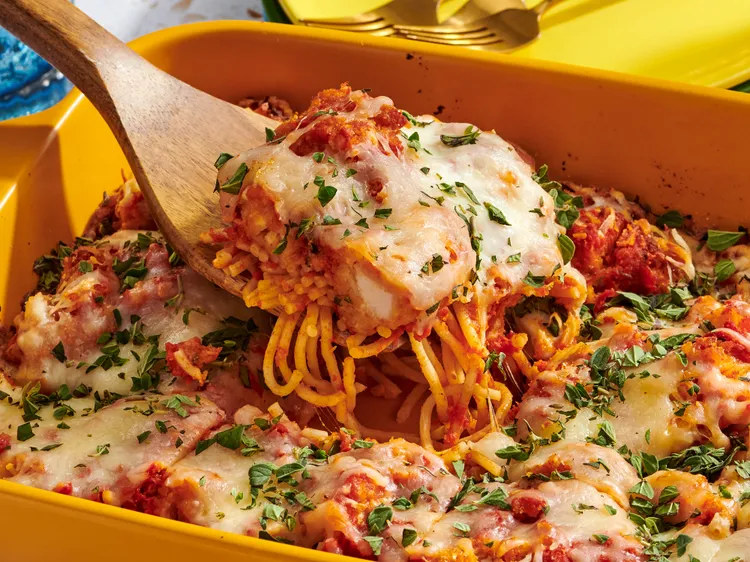
Crispy Chicken Tender Parmesan Casserole: The Definitive Weeknight Recipe
The classic Italian-American preparation of Chicken Parmesan—pollo alla parmigiana—remains a crowning achievement of comfort food. When executed correctly, it offers a brilliant study in culinary contrasts: the clean shatter of a golden-brown herb crust, the vibrant acidity of a slowly simmered tomato sauce, and the rich, pull-apart elasticity of molten mozzarella cheese.
Despite its undeniable appeal, traditional preparation methods are notoriously demanding for home cooks. The process requires extensive countertop space for a standard three-stage dredging station, multi-batch frying in hot oil, and careful timing to avoid dry meat or a waterlogged crust.
This refined Chicken Tender Parmesan Casserole offers a sophisticated reimagining of the iconic dish, re-engineered specifically to maximize efficiency while elevating structural integrity. By replacing unevenly sized whole chicken breasts with uniform, naturally tender chicken strips, we eliminate the need for flattening meat with a mallet and drastically reduce overall preparation time.
Ingredients
To achieve a truly excellent result, prioritize premium raw ingredients. Because this recipe relies on a concise lineup of components, the caliber of your cheese, sauce, and poultry will directly dictate the complexity of the final flavor profile.
For the Chicken Base
-
2 pounds fresh chicken tenders, trimmed of tough white tendons
-
2 tablespoons extra-virgin olive oil (cold-pressed)
-
1 teaspoon granulated garlic powder
-
1 teaspoon onion powder
-
1 teaspoon dried Sicilian oregano
-
1/2 teaspoon kosher salt
-
1/4 teaspoon freshly cracked black pepper
For the Tomato and Cheese Layers
-
24 ounces premium marinara sauce (one standard jar; select a brand that prioritizes imported San Marzano tomatoes, whole garlic cloves, and extra-virgin olive oil with no added sugars)
-
8 ounces low-moisture, whole-milk mozzarella cheese, shredded by hand (approximately 2 cups)
-
1/2 cup Parmigiano-Reggiano cheese, finely grated on a microplane micro-grater
For the Crispy Herbed Topping
-
2 cups plain Panko breadcrumbs (Japanese-style flake breadcrumbs provide a significantly greater surface area for a superior crunch)
-
3 tablespoons unsalted butter, melted
-
1 tablespoon dried Italian seasoning (a balanced blend containing rosemary, thyme, savory, basil, and marjoram)
-
1/4 teaspoon garlic powder
-
2 tablespoons fresh flat-leaf Italian parsley, finely minced (reserved exclusively for the final garnish)
Step-by-Step Instructions
This methodology employs a precise baking sequence designed to ensure the poultry remains moist and thoroughly cooked while preserving a stark distinction between the rich sauce and the crunchy crust.
Step 1: Preheat and Prepare the Station
Position your oven rack to the center slot and preheat the oven to 400°F (204°C). Lightly coat a 9×13-inch ceramic or tempered glass baking dish with extra-virgin olive oil or a high-heat cooking spray. Set aside.
Step 2: Clean and Season the Poultry
Using a sharp paring knife or kitchen shears, isolate the white tendon protruding from the narrow tip of each chicken tender and trim it away clean. Pat the tenders completely dry with clean paper towels. Eliminating surface moisture is essential for ensuring the olive oil and dry aromatics adhere properly to the protein.
Place the chicken strips into a large mixing bowl, drizzle with 2 tablespoons of extra-virgin olive oil, and sprinkle uniformly with the garlic powder, onion powder, dried oregano, kosher salt, and freshly cracked black pepper. Toss thoroughly until the chicken is evenly glossy and seasoned.
Step 3: Construct the Protective Casserole Base
Pour exactly 1/2 cup of your premium marinara sauce into the bottom of the prepared baking dish. Use the back of a ladle or large spoon to spread it into a very thin layer across the surface. This creates a protective moisture barrier that prevents the chicken from scorching or sticking to the pan.
Arrange the seasoned chicken tenders over the sauce in a tight, single layer. They should sit snugly against one another to retain heat but should not overlap significantly, which ensures uniform thermal distribution.
Step 4: Layer Sauce and Hard Cheese
Pour the remaining portion of the marinara sauce evenly across the top of the chicken tenders, ensuring every strip is thoroughly coated to seal in its natural juices. Scatter the finely grated Parmigiano-Reggiano uniformly across the sauce layer. This adds a sharp, salty depth of flavor that balances the sweetness of the tomatoes. Follow immediately with an even layer of the hand-shredded low-moisture mozzarella cheese.
Step 5: Mix the Butter-Toasted Panko Coating
In a separate, small mixing bowl, combine the plain Panko breadcrumbs, melted unsalted butter, Italian seasoning, and 1/4 teaspoon of garlic powder. Toss with a fork until the melted butter is thoroughly distributed and the breadcrumbs resemble coarse, golden wet sand. Scatter this mixture evenly over the top of the mozzarella cheese layer, working it completely into the corners of the dish.
Step 6: Bake to Golden Perfection
Place the uncovered casserole dish directly on the center rack of your preheated oven. Bake at 400°F (204°C) for 25 to 30 minutes.
Critical Culinary Cues: Monitor the dish closely during the final five minutes of cooking. The casserole is ready when the red sauce bubbles vigorously along the perimeter of the dish, the mozzarella is entirely melted, and the Panko crust has turned a deep, mahogany-gold color. To guarantee safety, insert a digital instant-read thermometer into the thickest part of a center chicken tender; it must read exactly 165°F (74°C).
Step 7: Rest, Garnish, and Portion
Remove the casserole from the oven and place it on a heatproof surface. Allow the dish to rest undisturbed for 5 to 10 minutes at room temperature. This brief cooling period allows the bubbling proteins and cheese matrix to set, making it easy to slice clean portions without the layers sliding apart. Just before serving, dust the top generously with the minced fresh flat-leaf parsley.
Expert Tips & Variations
Professional Cooking Insights
-
Avoid Pre-Shredded Cheeses: Commercial packaged shredded cheeses are treated with anti-caking starches, potato flour, and cellulose to prevent clumping in the bag. These additives impede a smooth melt, resulting in a grainier texture and premature browning. Processing a block of whole-milk mozzarella with a standard box grater ensures a silkier cheese pull.
-
The Delayed-Topping Crust Method: If you prefer an exceptionally sharp, shattered crust texture, alter the baking cadence. Bake the seasoned chicken, sauce, and cheese for the first 15 minutes without the breadcrumbs. Carefully remove the dish, distribute the buttered Panko mixture across the bubbling cheese, and return it to the oven for the remaining 15 minutes. This limits the breadcrumbs’ exposure to the moisture rising from the boiling sauce.
Ingredient Substitutions and Dietary Variations
To adapt this recipe for diverse nutritional requirements or alternative proteins, consult the structured guide below:
| Original Ingredient | Proposed Substitution | Targeted Nutritional Strategy |
| Standard Panko | Crushed pork rinds or fine almond flour mixed with extra parmesan | Low-Carb / Ketogenic |
| Chicken Tenders | Extra-firm tofu blocks (pressed dry, sliced into strips, and seasoned) | Vegetarian |
| Standard Panko | Certified gluten-free Panko or crushed gluten-free crackers | Gluten-Free |
| Mozzarella & Butter | Plant-based mozzarella alternatives and extra-virgin olive oil | Dairy-Free / Vegan |
Serving Suggestions
This robust, savory casserole functions beautifully as a versatile centerpiece, easily adjusting to match the formality of your evening.
-
The Italian-American Classic: Spoon a generous, piping-hot serving over a bed of al dente spaghetti, rigatoni, or penne pasta that has been lightly tossed in a warm coat of marinara and extra-virgin olive oil.
-
The Low-Carb Alternative: For a lighter meal profile, layer the cooked chicken and sauce over warm roasted spaghetti squash strands or freshly spiraled zucchini noodles (zoodles). The natural sweetness of the squash balances the acidity of the tomato sauce.
-
The Acidic Counterpart: Because this dish features rich, fatty cheeses and savory oils, it pairs perfectly with a bright, crisp salad. A traditional Caesar salad with a sharp, lemony garlic dressing or an arugula salad dressed in a simple red wine vinaigrette cuts through the richness beautifully.
-
Garlic Baguette: Serve alongside a warm, toasted baguette rubbed with raw garlic cloves and butter, perfect for dipping into any extra marinara sauce left behind.
Storage & Make-Ahead Notes
Because this dish relies on stable, low-moisture cheeses and sturdy poultry cuts, it holds up exceptionally well to meal prepping, freezing, and reheating.
Refrigeration and Reheating Protocols
-
Storage: Allow any leftovers to cool completely to room temperature. Transfer the remains into an airtight glass storage container and store in the refrigerator for up to 4 days.
-
Reheating: To prevent the chicken from drying out or the cheese from turning oily, avoid using the microwave for large portions. Instead, place individual servings in an oven-safe baking dish, tent loosely with aluminum foil to trap moisture, and heat in a 350°F (177°C) oven or toaster oven for 12 to 15 minutes until warmed through. Remove the foil for the final 2 minutes to restore the crispiness of the Panko.
Freezing Guidelines
This dish can be frozen successfully if assembled in a disposable aluminum baking pan.
-
Freezing Unbaked: Assemble the casserole completely through the cheese layer, but do not add the buttered Panko topping (as frozen breadcrumbs will turn mushy upon thawing). Wrap the pan tightly with a double layer of plastic wrap, followed by a heavy layer of aluminum foil. Freeze for up to 3 months.
-
Thawing and Baking from Freezing: Thaw the pan completely in the refrigerator overnight. Before baking, prepare a fresh batch of buttered Panko breadcrumbs, scatter them over the top, and bake at 400°F (204°C) as instructed. You may need to add an extra 5 to 10 minutes to the total baking time since the ingredients will start cold.
Nutrition Information
The following values are estimated calculations based on one standard serving, assuming the entire recipe is divided into 6 equal portions.
-
Calories: 410 kcal
-
Protein: 42 g
-
Fat: 18 g
-
Saturated Fat: 8 g
-
Carbohydrates: 19 g
-
Fiber: 2 g
-
Sugar: 5 g
-
Sodium: 890 mg
Kitchen Production Timeline
If you are orchestrating a multi-course dinner or simply mapping out a hectic weeknight evening, use this step-by-step production timeline to manage your time efficiently.
| Phase | Culinary Tasks | Active/Passive Time |
| Phase 1: Prep | Preheat oven to 400°F; hand-shred mozzarella; trim chicken tenders of tendons. | 10 Minutes (Active) |
| Phase 2: Assemble | Season chicken; layer sauce, chicken, cheeses, and buttered Panko topping in dish. | 5 Minutes (Active) |
| Phase 3: Bake | Place casserole on the center rack; bake uncovered until chicken hits 165°F. | 25–30 Minutes (Passive) |
| Phase 4: Rest | Let casserole stand at room temperature to allow cheese and sauce matrix to set. | 5–10 Minutes (Passive) |
| Total Time | From raw ingredients to a beautiful family dinner | 45–55 Minutes |